Log in
Alan El
About the People
The Alans are the direct descendants of the nomadic, hereditary herdsmen of the Eurasian continent—the Scythians and Sarmatians. Their legacy can be traced in the language, culture, and archaeological sites of the region. Despite artificial division, ethnocide, genocide, and nearly a century of uninterrupted occupation, the Alans of Karachay and Balkaria still retain a common ethnic identity, including their single ethnic designation, "Alan."
History
The Alans formed as a people in the lands to the west, north, and east of Mount Elbrus. It was there that our ancestors established an early feudal state, which reached its peak by the 10th century and developed a rich Tengrism-based culture. The Alans have preserved their identity to this day, and it is reflected in every aspect of their heritage. Archaeological findings — including elements of the Koban culture and Alan burial vaults — confirm the continuity of their legacy from ancient times.
Culture
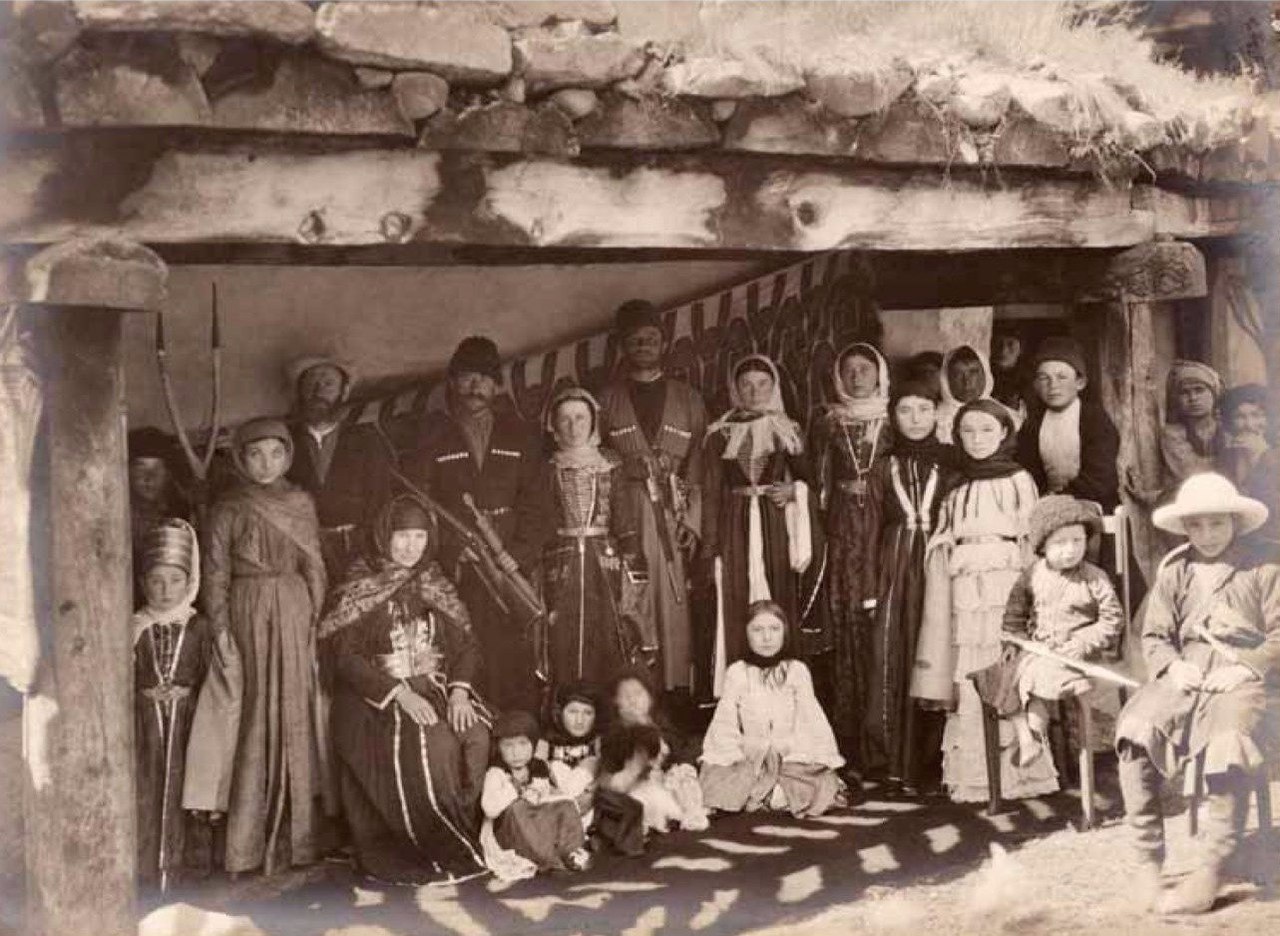
Alan culture is extremely diverse and practical. Traditionally, the Alan People consist of tribes and clans. The main tribes in Karachay are Nauryz, At-Turkay, Turam, Buduyan, Shat-bek, Urus-Biy, Yozden, and Botash. In Balkaria, large tribal unions gave way to a clan-based system, where each major clan had its own settlement. Each clan has its own ancestral symbol — a "tamga" / "tangba" (from the Old Turkic word "tanykpa", meaning “identifying mark”). Alan national clothing Alan clothing combines the functionality of mountain life with aesthetic expression: - Men’s attire: "Chekpen" with cartridge belts, "bashlyk", "kiyiz bashlyk", "tarytma" or "bellik", "kama" dagger, "kylych" sword. - Women’s attire: A long dress with a silver belt, and the headdress "kush tögerek" (decorated with beads). Travelers noted the elegance and practicality of Alan garments, which emphasized both social status and occupation. Alan national jewelry Alan jewelry art included: - Silver items: Pendants and bracelets with geometric and animal motifs. - Daggers and belts: Inlaid with stones, symbolizing warrior valor. Alan stone monuments of architecture and culture - Family palaces (assembly halls, or “temples” in the interpretation of colonizers) in Lower Arkhyz, Synty, and on Mount Suu Ana, dating to the 10th–12th centuries, with frescoes. - Sarcophagus-style crypts: In the gorges of Arkhyz, Kuban, Chegem, and Baksan, decorated with carvings. - Defensive towers: For example, in Karachay — the Ak-Bilek towers on the Inchik Zelenchuk River, Koshayak-kala near the village of Kyzyl Kala, Ak Kala near the settlement of the same name, and Uskurtuk Kala on the Inchik River in Upper Balkaria. Alan–Bulgar log architecture Alan dwellings were built from pine logs, with a gabled roof to protect against snow. Inside were wooden beds and a hearth as the center of the home. Such structures are mentioned in historical records as symbols of harmony with nature. Alan crafts - Stone carving: Creating tombstones with solar symbols. - Metallurgy: Forging weapons and agricultural tools. - Leatherworking: Producing "charyk" footwear and horse harnesses. Alan animal breeds - Alan horses: Known for endurance and used in mountain crossings. Before the genocide of the Alan People, there were three main varieties of horses: Qaspar in Balkaria, Jorg’a in Karachay, Chaghatay in Beshtau and Kara-Batay. In addition, each clan had its own subtypes and coat colors.
Language
Alan dialect of the Turkic language
The Alan dialect of the Turkic language is the native language of the Alans of Karachay and Balkaria.
It has preserved many Old Turkic linguistic features, a rich grammatical system, and a substantial layer of ancient vocabulary.
Throughout different historical periods, runic, Arabic, Latin, and Cyrillic writing systems were used to record it.
The historical and cultural symbol of its written tradition is the Alan Turkic script, which traces back to the Old Turkic runic heritage.
Self-designation of the language:
• Alan Til — Alan language.
Dialects
The Alan dialect is represented by two regional varieties.
Alan dialect of Karachay
Characterized by the preservation of several ancient phonetic forms.
Alan dialect of Balkaria
Distinguished by certain phonetic features in the pronunciation of specific consonants.
Both varieties are fully mutually intelligible and constitute a single language.
Main features of the language
Agglutination
Grammatical meanings are formed by sequentially attaching affixes to the word stem.
Example:
üy — house
üyle — houses
üyleribiz — our houses
Vowel harmony/
The language preserves a well-developed system of vowel harmony, characteristic of Old Turkic languages.
Word order
The most common word order is:
Object + Predicate + Subject.
Example:
Suv içeme men.
“Water drink I”
Case system
The language uses the following cases:
• nominative
• genitive
• dative
• accusative
• locative
• ablative
Verb system
The language has developed categories of:
• tense
• mood
• voice
• participles
• gerunds
Vocabulary
The core of the vocabulary consists of Old Turkic words.
Examples:
• suv — water
• kün — sun
• aj — moon
• qol — hand
• at — horse
• üy — house
• tav — mountain
• temir — iron
The language has preserved a significant layer of ancient Turkic lexicon.
Alan Turkic writing
The oldest form of the written tradition is considered to be **Old Turkic runic script**, widely used among Turkic peoples of Eurasia.
Examples of signs: 𐰴𐰍𐰣 / 𐱅𐰇𐰼𐰰
Latin-based writing:
Used since the first half of the 20th century for transcription and publications intended for Alans who do not know the native writing system.
Modern Alan Turkic writing
The modern Alan Turkic writing system is based on a unified Old Turkic runic tradition.